
Processing Paul Thomas Anderson's The Master (2012) Without Blinking—Mostly
Part Four of Dern Right! A Laura Dern Quadruple Feature

After college, I was substitute teaching to try and land a full-time position and when I wasn’t subbing I was working at a local furniture store. One summer day, a colleague and I delivered a white wicker loveseat to a nearby beach house and when we pulled up there were a bunch of twenty-somethings coming and going with various lighting and camera equipment. Upon bringing the piece inside the home, it felt like we were transported back to the early 1950s with every detail fitting the period right down to the wood-paneled Wurlitzer radio. A woman with a clipboard who seemed to be organizing the vague photo/video shoot inside the living room showed us where to put the loveseat and upon placing it down, I realized it fit the old-fashioned aesthetic perfectly. We then had her sign and were about to leave when all of the people working on whatever project it was quietly surrounded us and in very disarming voices tried to get us to relax and hang out for a while. Both of us blurted out excuses and made our exit as fast as possible, breaking into a light jog once we got outside. Back in the delivery van, we discussed the shared feeling of alarm both of us experienced as if by instinct and how unsettling it was. Later that day we found out the beach house was where a certain science fiction writer turned cultist shyster lived from 1949-50 and wrote the most foundational text of his pseudo-religion: a little book called Dianetics.

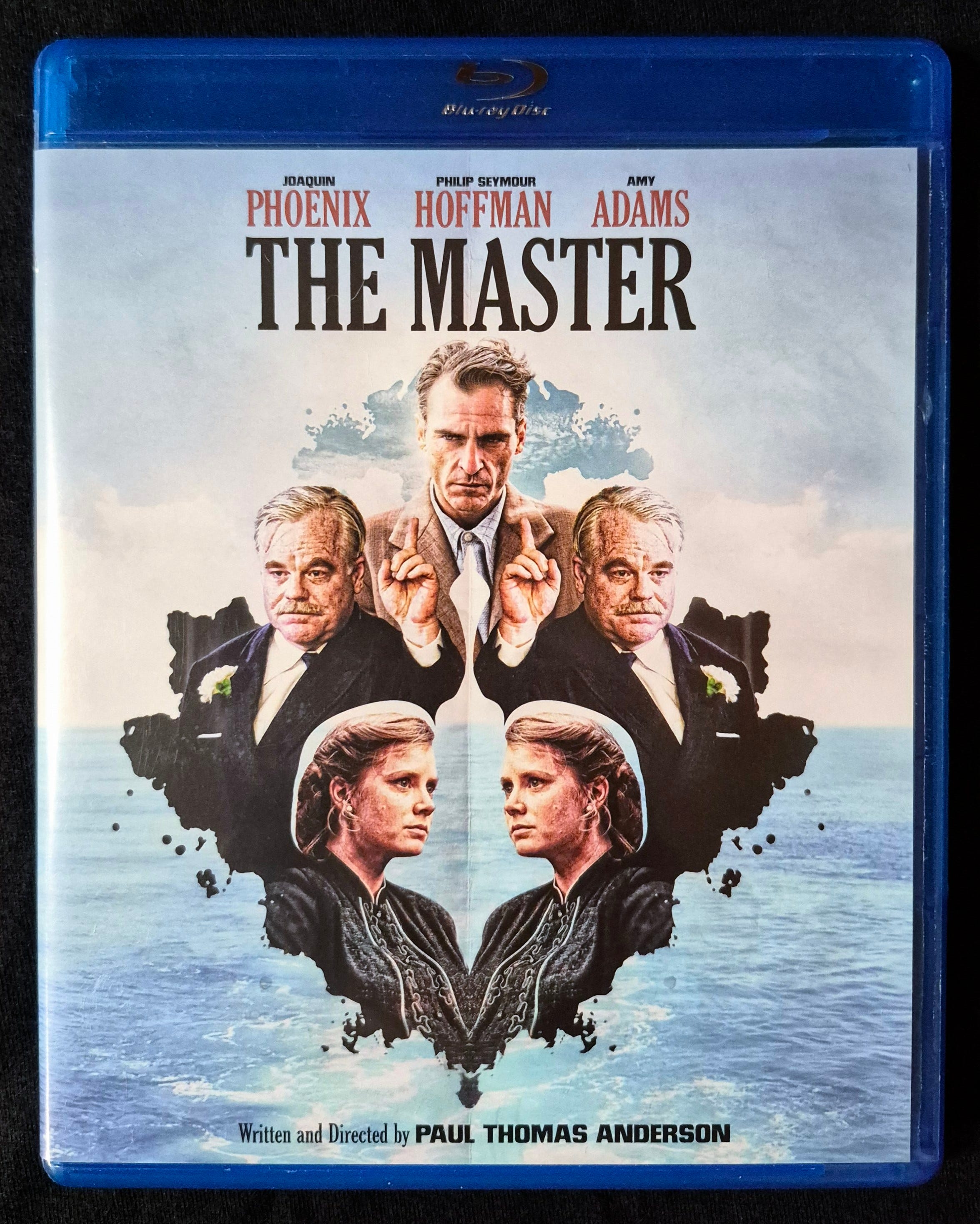
When I read a brief synopsis for Paul Thomas Anderson’s The Master (2012), I recognized the parallels to Scientology right away, especially in regards to its early Sea Org days. However, the film itself is not so much interested in exploring the dangers of its—for all intents and purposes—cult known as The Cause as it is with exploring an unlikely bond between its founder and a wayward soul who finds his way aboard the group’s yacht.
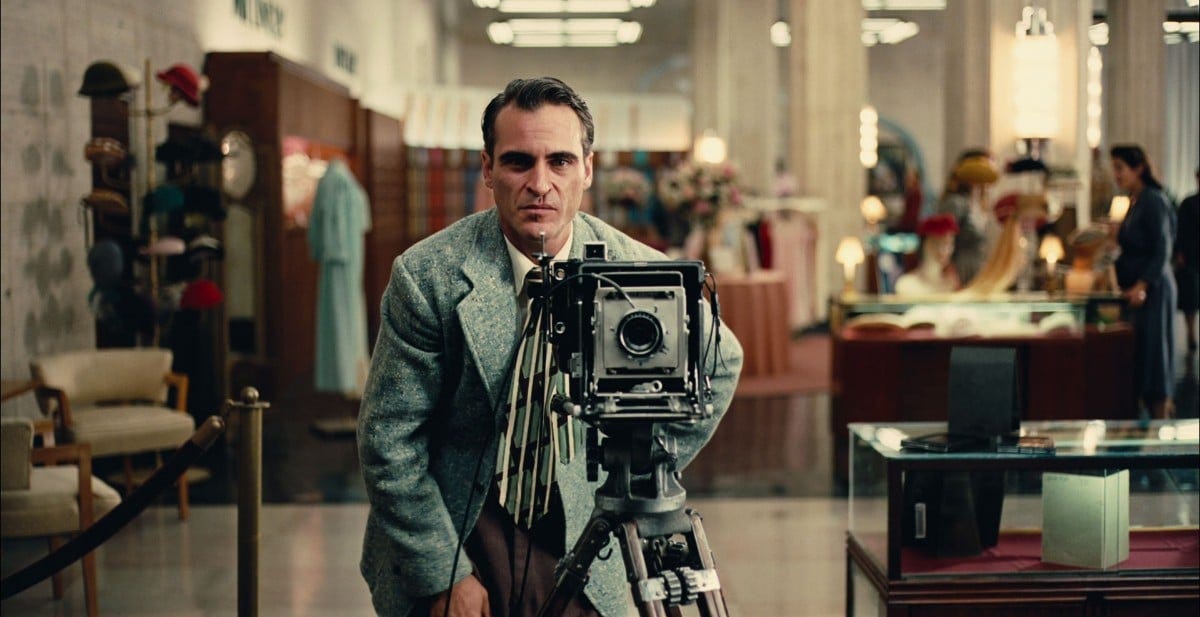
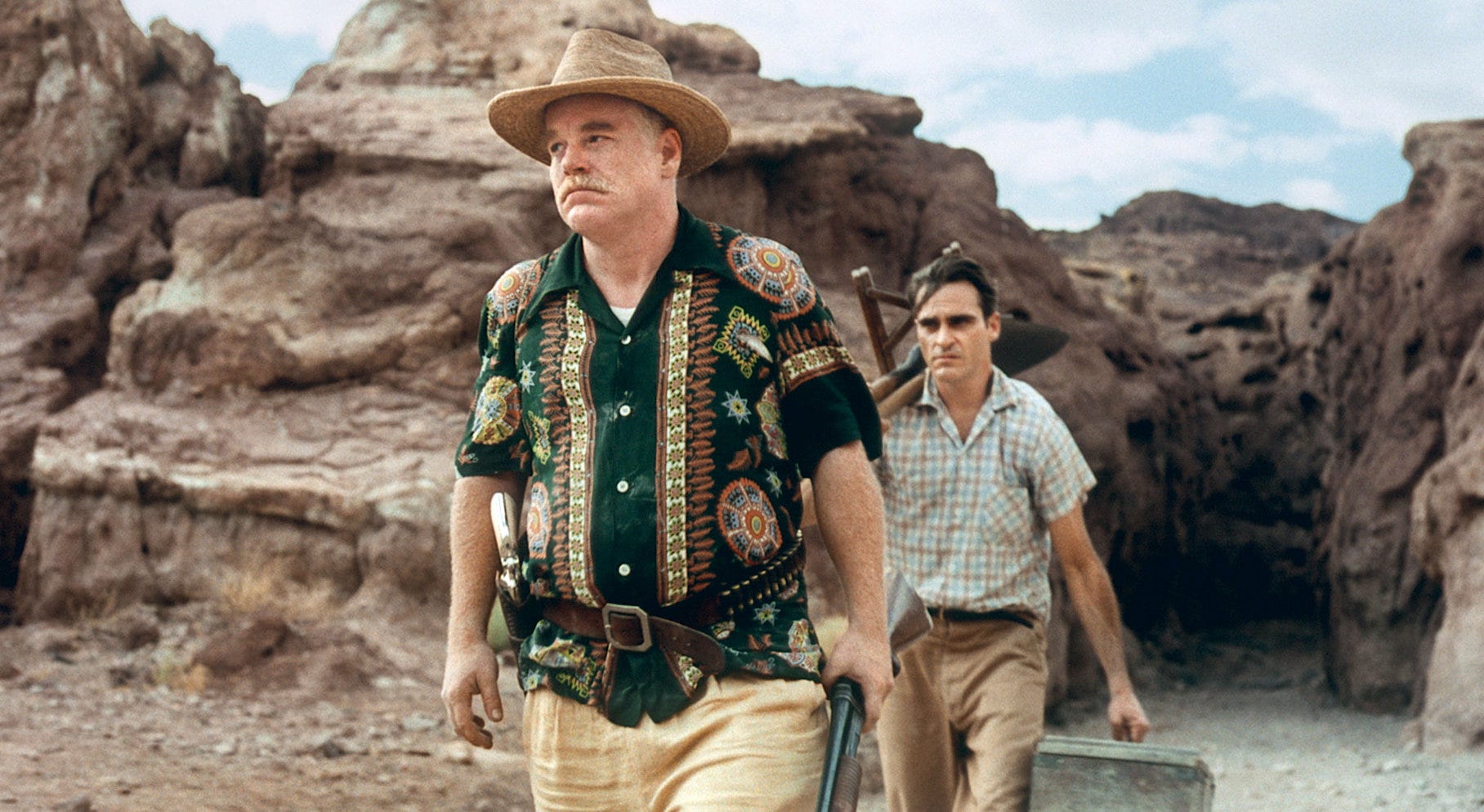
The film’s protagonist, Joaquin Phoenix’s Freddie Quell, is a Navy veteran who served in World War II and Phoenix dives into this character for what is arguably his best work. Freddie is withdrawn, erratic, and prone to violence, all of which is exacerbated by his unique form of alcoholism. After the war, Freddie is psychologically evaluated for PTSD and the Rorschach Test results find him to also be completely sex-obsessed. He then works as a department store photographer where he’s briefly seen in the dark room mixing drinks and attempting to seduce a female colleague. When the two go out later that night, Freddie is passed out at the dinner table well before the two can finish what they started at the store. This scene implies that, though obsessed with sex, Freddie’s alcoholism has made him impotent.
Not satisfied with traditional booze, Freddie makes concoctions of whatever household cleaners and chemicals he finds and claims to know how to drink them carefully without fatal consequences, but the addiction still manages to destroy his life. He picks a drunken fight with a customer at the store and then is next seen working as a farmhand where his cocktail almost or maybe even does kill an elderly worker. His flight from the farm is what leads him to The Cause as a stowaway on their yacht, the Alethia (Scientology’s flagship was the Apollo).
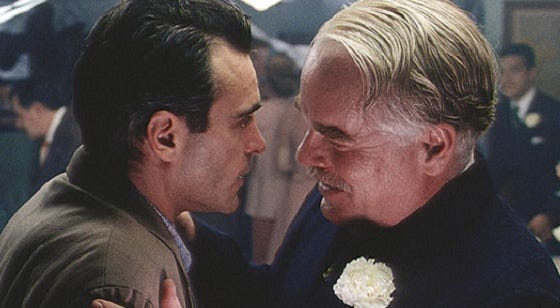
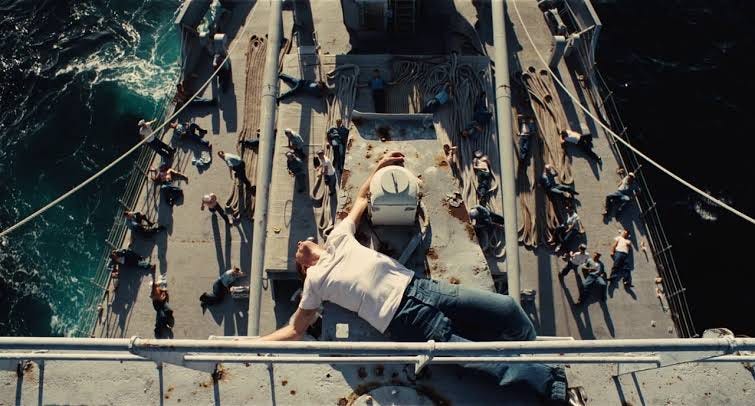
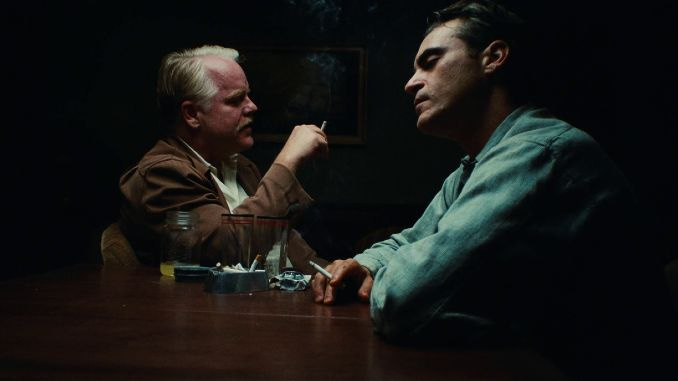
Waking up on the boat far out at sea, Freddie is brought before the Master, Philip Seymour Hoffman’s Lancaster Dodd, a clear proxy for L. Ron Hubbard. The two bond over Freddie’s mixology skills and Dodd takes the wandering drunk on as a protege and drinking buddy. The two couldn’t be more polar opposites of leader and follower, brains and braun, civilized and savage, fat and skinny, calculating and impulsive, pacific and violent, and so much more. The contrasts are endless and yet they have a powerful bond through the course of the film that leans heavily into the category of toxic co-dependence.
I went to college in Tampa, Florida, which is a stone’s throw from the world headquarters of Scientology in Clearwater, so I saw the uniformed disciples in the area pretty regularly. They would set up Dianetics kiosks at the malls and sometimes they’d even be at my campus, usually at the beginning of the Fall semester to sink their hooks into the impressionable freshmen. One first day of school, my now-wife and I walked by one of their tables and saw a young student sitting and holding the metal cylinders of the E-Meter while being “audited” through the Dianetics “stress test.” As we passed within earshot of the test, all we heard was the impressionable young student excitedly say, “Wow, that’s exactly what my therapist says!” I then looked at my wife and remarked, “They got another one.”
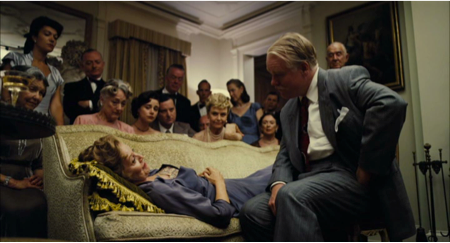
The precepts of The Cause are similar to Scientology’s ideas of inherited trauma from past lives and a malevolent alien force seeking to control and suppress the growth of each hapless victim who’s unable to see through the group’s manipulative ways. Dodd’s wife, Amy Adams’ Peggy, tranquilly tells Freddie “We record everything through all time” and when he finds a room of cultists quietly listening to audio recordings, he picks up a headset and hears the Master’s voice telling him “You are not ruled by your emotions.”
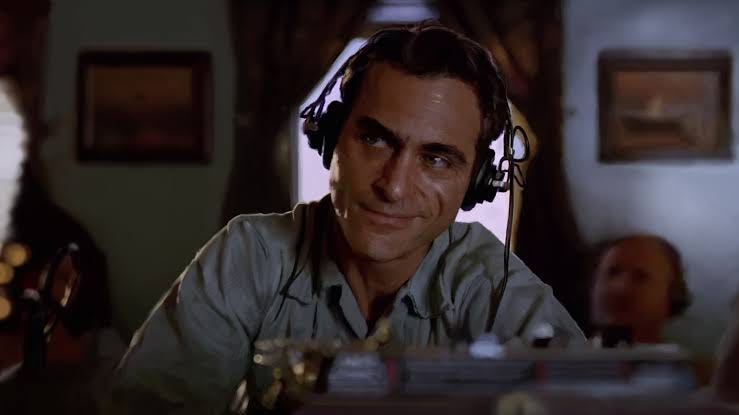
In place of the audit of a Dianetics test, Dodd subjects Freddie to a grueling, multi-tiered process of brainwashing and conditioning disguised as a psychological exploration called “processing.” Through processing, Freddie dives into his past, his sexual hangups, and his shortcomings, experiencing a genuine catharsis that comes from opening up after being closed off for so long. However, there is arguably no real growth in Freddie and he’s still a violent, unpredictable drunk, the only difference is the Master has him on a leash.
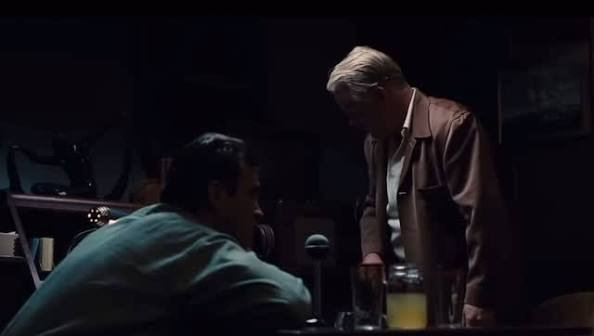
Organized religion is built around order and control and by extension cults prey on vulnerable lost souls like Freddie with an extreme take on those notions. I can’t help but make another connection when Freddie smokes Kool cigarettes (drinking the Kool-Aid), which elicits from Dodd a chuckle and a declaration that “I like Kools.” Through his loyalty to The Cause, Freddie finally feels a sense of belonging and lashes out at anything that threatens it. After Dodd is ambushed and embarrassed by a skeptic at a New York party, Freddie takes Dodd’s son-in-law to the guy’s apartment to beat the shit out him, reflecting the intimidation tactics Scientology is now known to employ. However, the Master doesn’t condone Freddie’s behavior then or when he’s arrested in Philadelphia and reacts like a mad dog, requiring three police officers to bring him down.
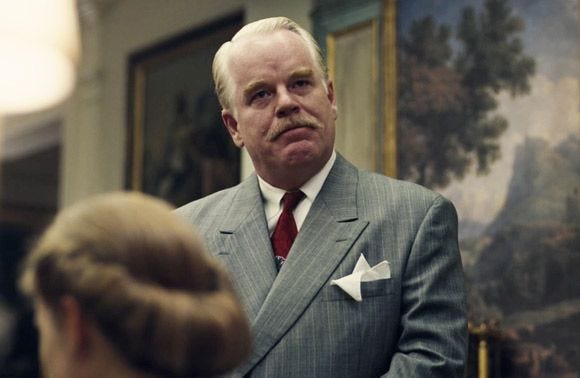
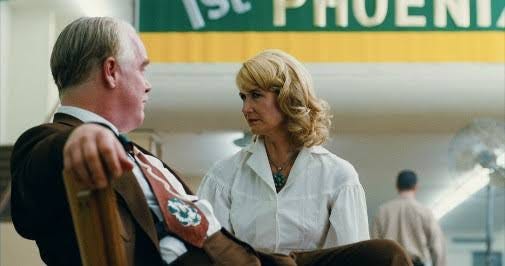
Philip Seymour Hoffman is brilliant in his portrayal of Lancaster Dodd as a grade A bullshit artist. He’s quick-thinking, learned, and a master manipulator, but a discerning eye free of Kool-Aid-colored glasses can see through it. The aforementioned skeptic calmly tries to discuss the holes in Dodd’s ethos and when the Master can’t master the debate he lashes out, loudly calling the man a “pig fucker” in a room of snooty New York socialites. In this moment, the viewer sees the one trait he and Freddie share and the secret to their bond: a quick temper triggered by insecurity. He has another flash of anger when a devoted disciple, Laura Dern’s Helen, points out an inconsistency in the processing—uh—process laid out in Dodd’s second book; after unsuccessfully trying to bullshit his way out of the situation, he finally yells and causes her to jump in her seat.
Dodd’s adult son, Val, hangs around the periphery of the group, but he’s not a believer. When Freddie calls him out for it, the young man looks him in the eyes and states the first truth he’s heard in a while: “He’s making this all up as he goes along.” Almost immediately after this revelation, the police show up to arrest Dodd for fraud. Freddie’s rabid behavior during the arrest and his stay in the holding cell is partly an internal struggle of knowing Val’s right, but not wanting to accept it. The image of Freddie stomping the toilet to pieces as Dodd stands calmly and silently in the neighboring cell is a perfect illustration of their dynamic and it ends with Freddie echoing Val’s statement repeatedly in Dodd’s face. Val, however, is just as much of a hypocrite as he sits idly by, reaping the benefits of his father’s destructive grifting.
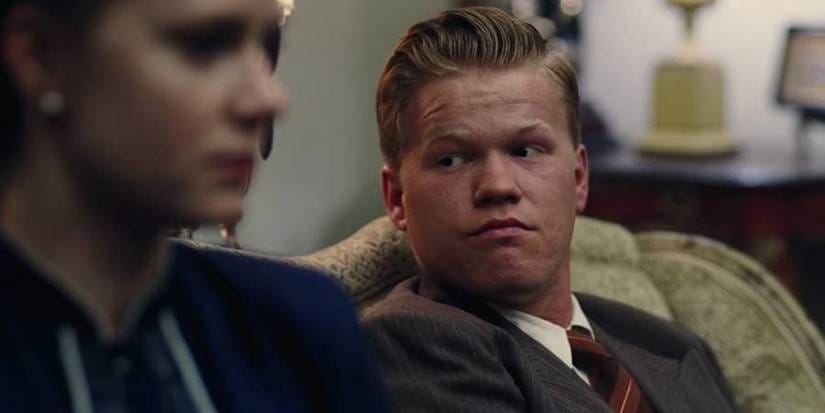
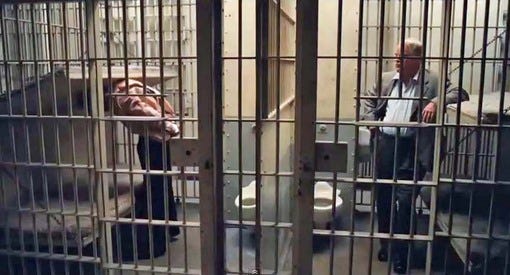
The hollowness of Freddie’s newfound family shows itself during his temporary incarceration when everyone sees the opportunity as a perfect time to turn Dodd against his corrupting influence. They lie and cast aspersions about Freddie’s loyalties, but the Master isn’t fooled and he warmly welcomes Freddie back into the fold. However, it’s no coincidence that he chooses this point to bring Freddie’s processing to the next level. After a grueling program of painful repetition to break his spirit, Dodd declares that Freddie has completed his processing (something the real cult never declares without a substantial sum).
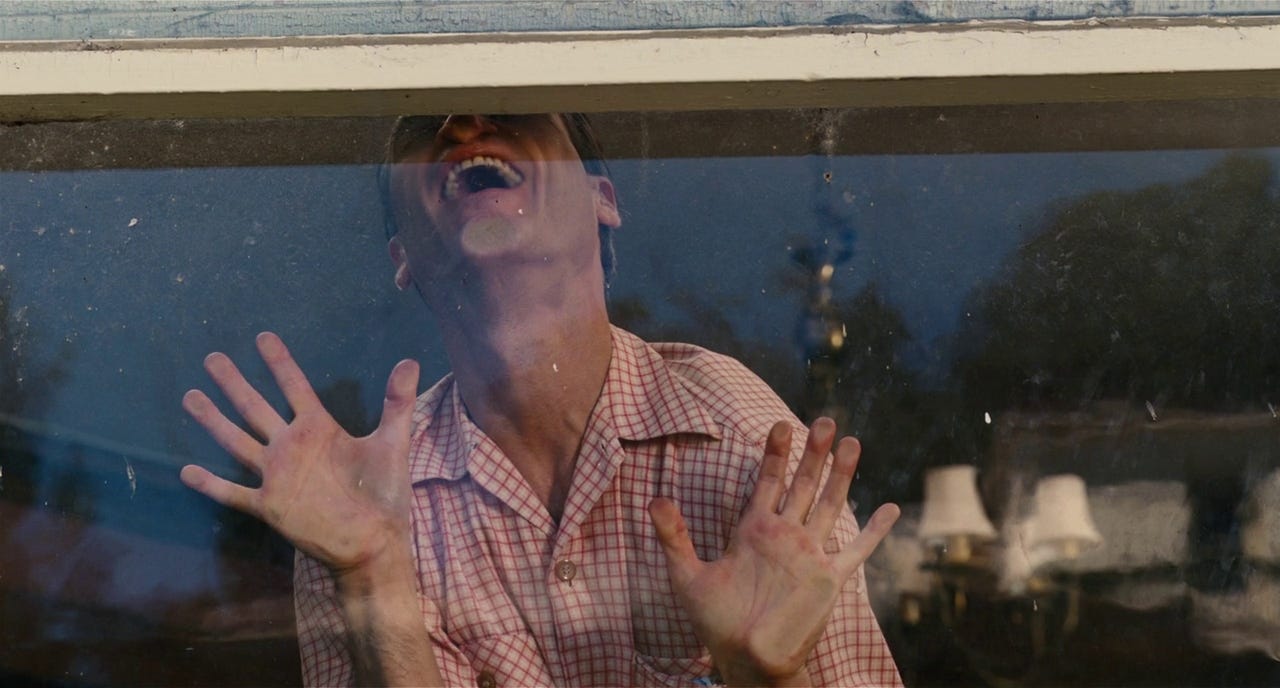
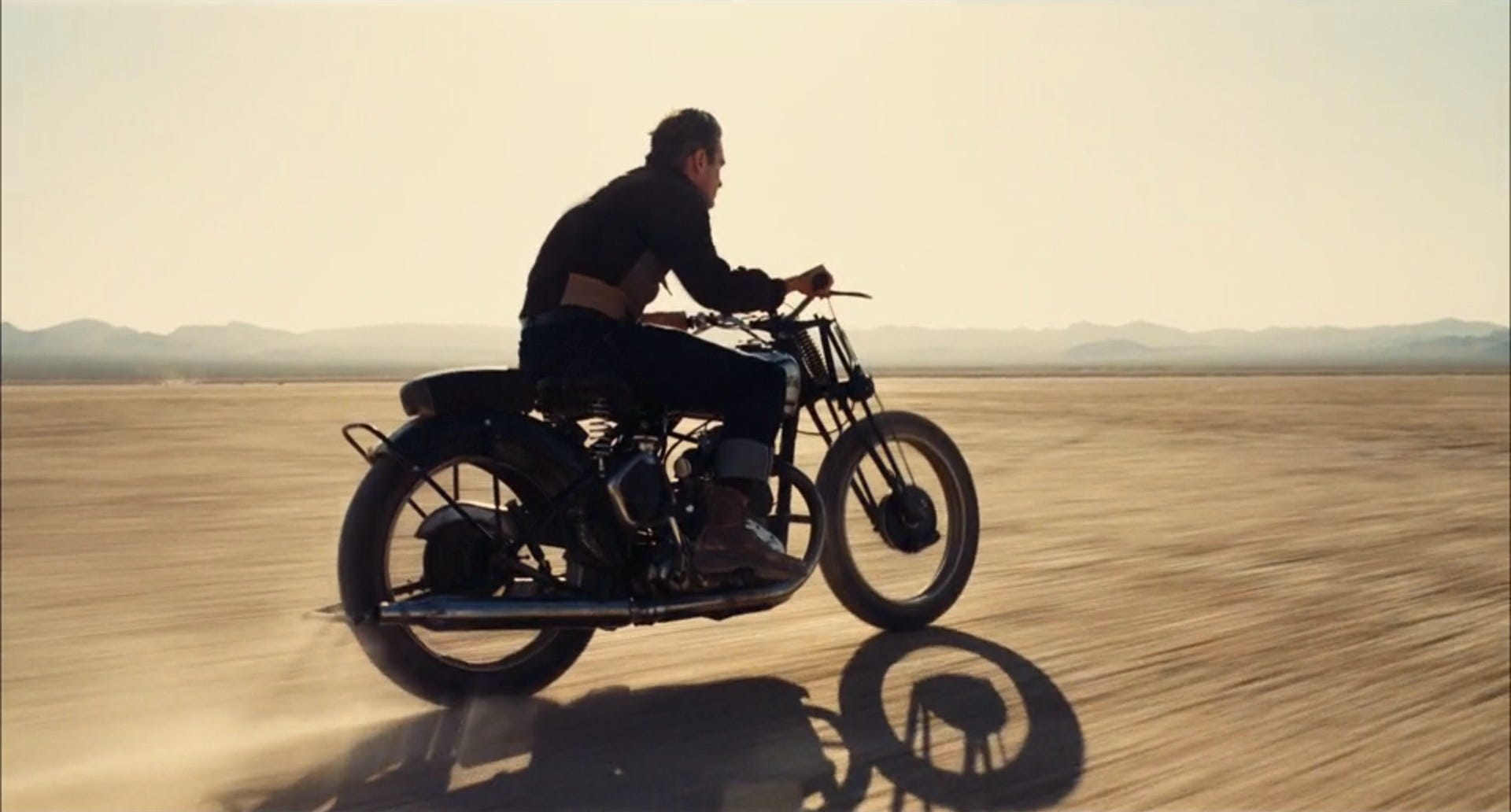
Freddie then uses his photography skills to help get The Cause’s propaganda machine going before ultimately disappearing on Dodd’s motorcycle to find his own way. The viewer knows Freddie is doing the right thing because Dodd rides the bike across the salt flats first and is shown in the frame moving from right to left, which often represents regression, whereas Freddie hops on the motorcycle and rides from left to right away from The Cause in a way representative of progress.
The two kindred spirits reunite further down the road and it’s not as happy of a reunion as one might expect. Freddie brings a peace offering of half a dozen packs of Kools—hardly compensation for a stolen motorcycle—and Dodd finally reveals something he’s been teasing the entire movie, which is a revelation that highlights the strength of their bond but in literal terms is complete bullshit. Dodd simultaneously loves, hates, and respects Freddie because he can’t break him; he might be able to hold him temporarily, but not for good and at the end of the film Freddie has passed his own test.
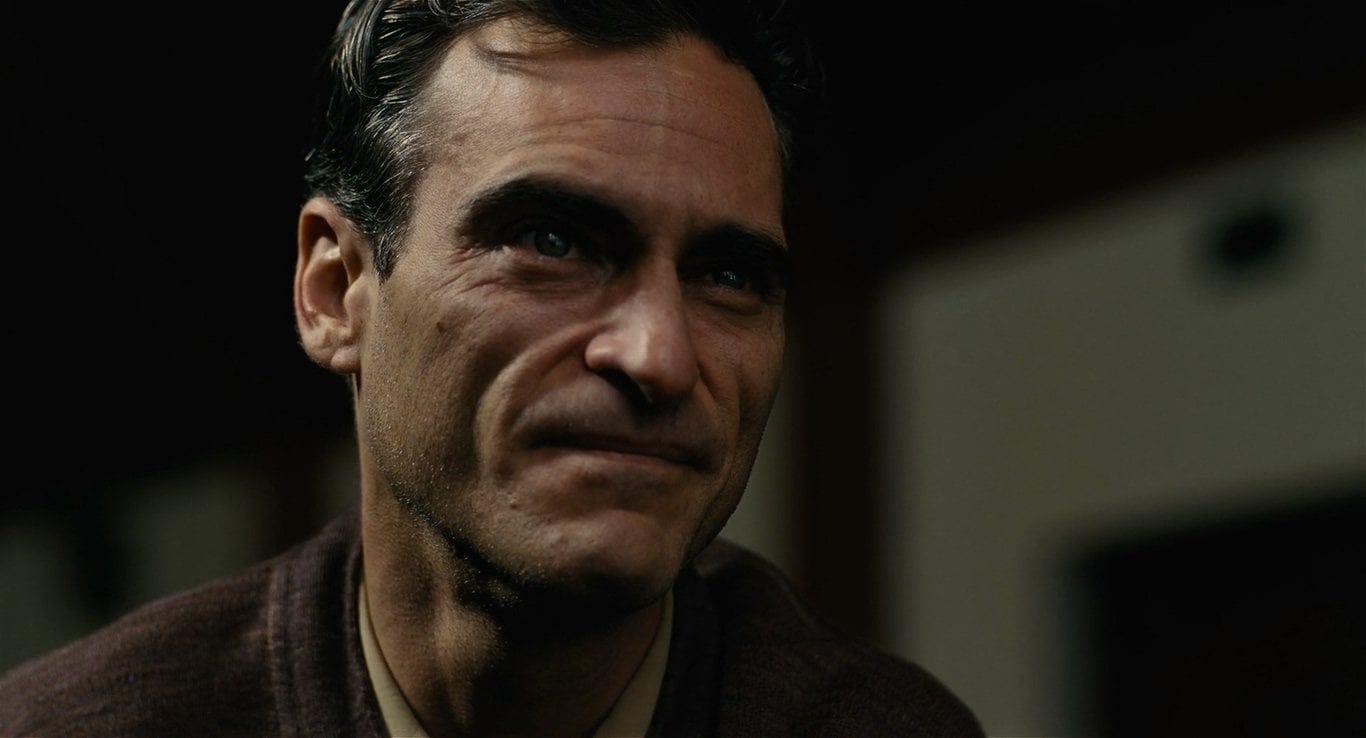
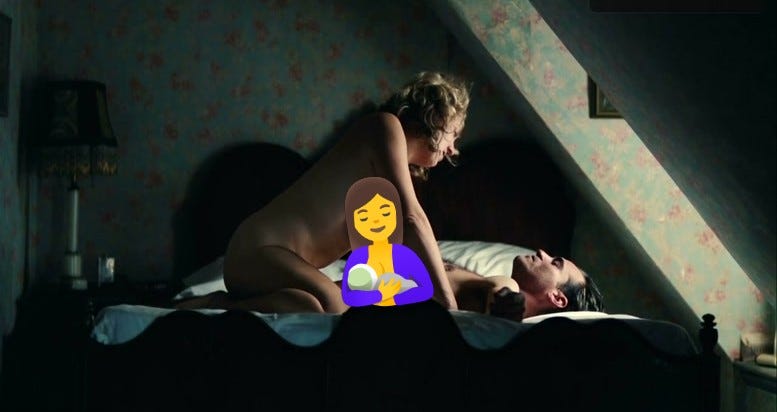
Freddie’s healing is undoubtedly due to The Cause, but not in the way Dodd intended and it’s represented by Freddie finally engaging in the act of sex with which he’s been so preoccupied. As he lies on a bed being ridden by an English woman he met in a bar, he light-heartedly asks her processing questions, revealing that The Cause no longer has a hold over Freddie, but it was a very formative step towards him becoming his own person and he has fond memories of the experience—that is, until his penis slides out and he needs to refocus on the task at hand: fucking.
I lived in Clearwater for middle through high school. By the early '90s, Scientologists owned most of the city downtown. I generally tried to avoid that area, but when I had to go, I'd see groups of them in their ridiculous fake Navy dress whites roaming the streets in packs, as if hunting for the next victim to fleece. It was unnerving.
Also, yes, as said above, "intents and purposes." 😀