

High Plains Drifter (1973): Hell Comes to Lago Town
Part Two of Get Off My Lawn! A Clint Eastwood Movie Marathon

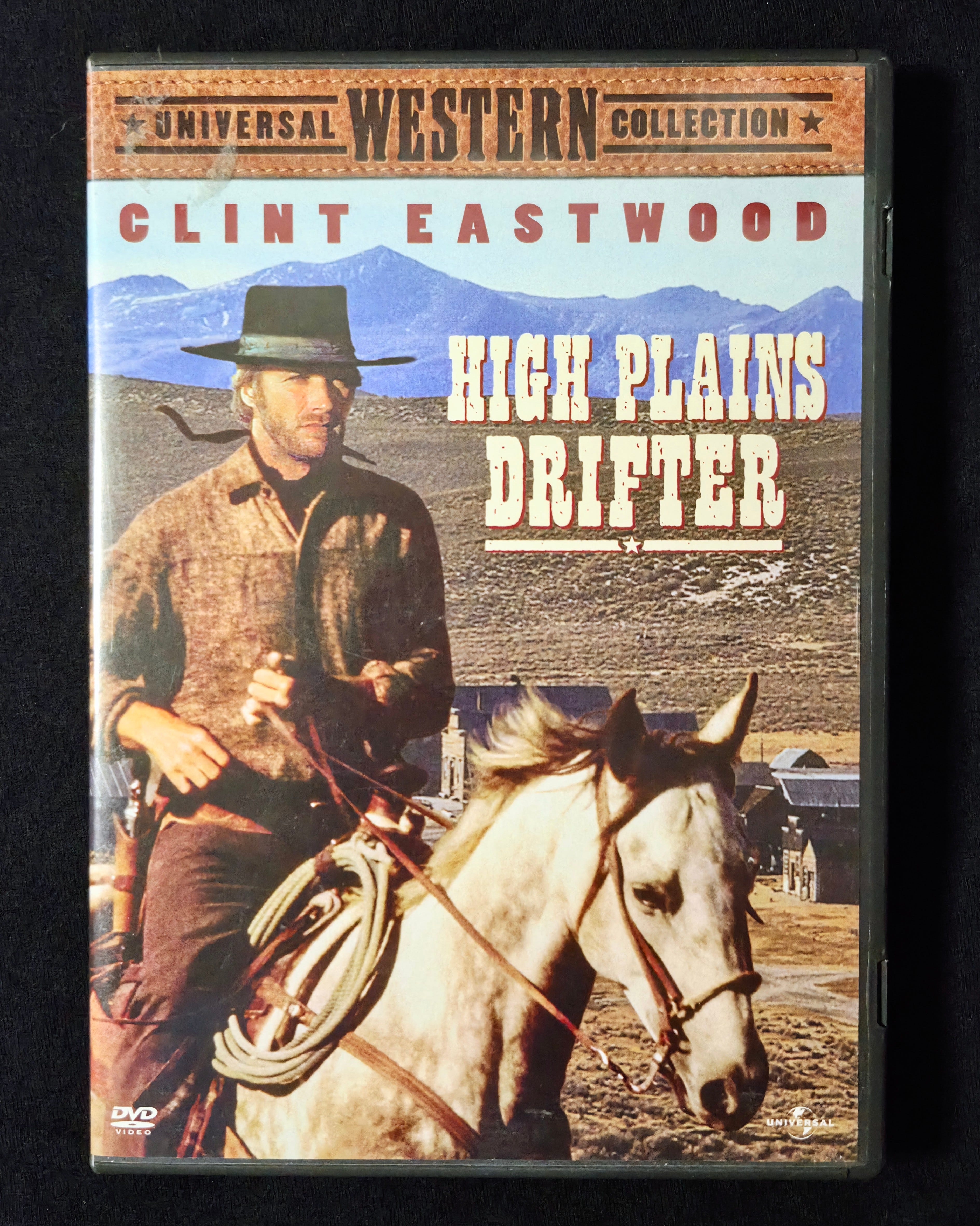
Before I get into any particulars about High Plains Drifter (1973), I have to address the elephant in the room with any discussion of this film: the multiple incidents of sexual assault and violence towards women perpetrated by the protagonist, Clint Eastwood’s unnamed “Stranger.” Eastwood is at his meanest and most unlikeable in High Plains Drifter and his violent assault of Callie Travers after she bumps into him in the street is horrific. The twist of the film reveals his animosity towards this particular woman and everyone else, but nothing justifies his actions and the movie’s better without those scenes, especially considering how gratuitous and disconnected they are from everything else going on. There are other ways for the Stranger to get his revenge and still be a piece of shit.
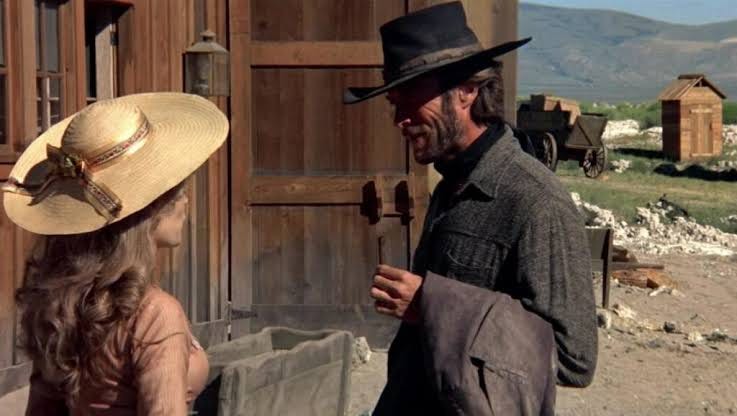
The scene also takes place very early in High Plains Drifter and it’s jarring because the tone hasn’t been established at this point, so it’s tough to gauge the movie’s attitude towards the Stranger’s reprehensible actions. If anything, it’s this moment that establishes the tone and while watching I made a note that the act cements the Stranger as a monster, but the jury’s still out on whether or not the movie thinks so, too. Shortly after, he’s seen giving candy and blankets to a native family in a general store after they’re called “goddamn savages” by the owner and I was furious at High Plains Drifter’s attempt at a “save the cat” moment, but it’s another case where the twist reveals this scene to be something else entirely. The inverse to this is the later scene with the Stranger’s refusal to allow the Mexican laborers to partake in the “picnic” he’s preparing for the returning outlaws, but they’re both similarly connected to his overall motive. Simply put, this is a hard movie to watch the first time around.
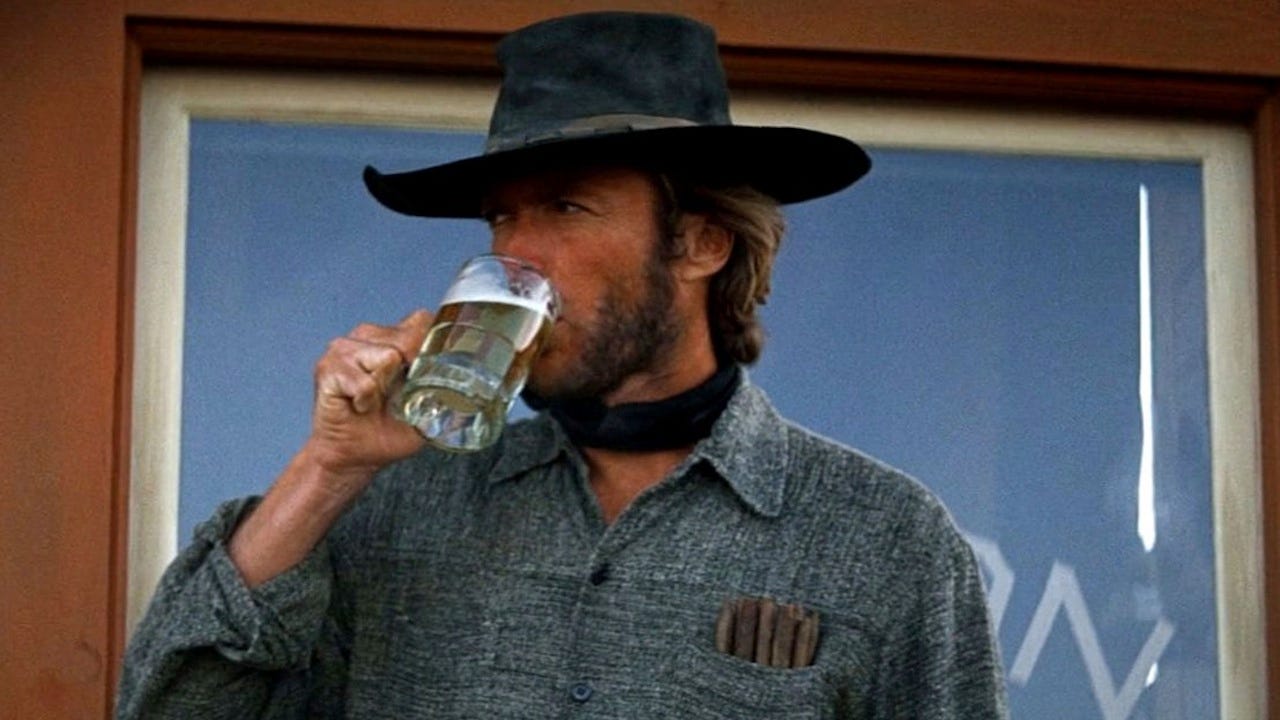
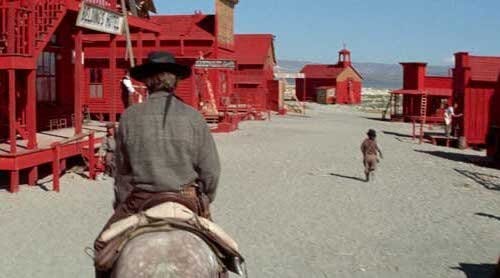
Prior to the touchstone sexual assault of the film, Eastwood as the lone gunman rides into the town of Lago—a freshly built town, mind you, represented by a freshly built set—with not a line of dialogue from anyone for seven minutes. It’s the typical setup of his earlier spaghetti Westerns with Sergio Leone, but as with almost every Western he directed, Eastwood’s more interested in deconstructing his earlier work by tearing down its tropes and misguided hero worship. The Stranger shows up, shoots three loudmouths, and rapes a woman in plain sight, leading the rest of the town to think, “This is our man to help us with our outlaw problem!”
It’s essentially Kurosawa’s Seven Samurai (1954), but with one absolute piece of shit and it’s Eastwood the director telling the viewer, “No, you don’t trust the weird loner who drifts into town to be your savior because there’s probably a reason he’s a weird loner and you’re going to be in a worse position than you were before.” On a similar note of deconstruction, it’s always irked me how people in Westerns are typically suspicious and aggressive towards outsiders, but in reality most of the frontier towns of the Old West couldn’t survive without outside money. It’s like how people in my beach community hate the tourist boom every summer, myself included, but 90% of the town’s revenue is earned between Memorial Day and Labor Day.
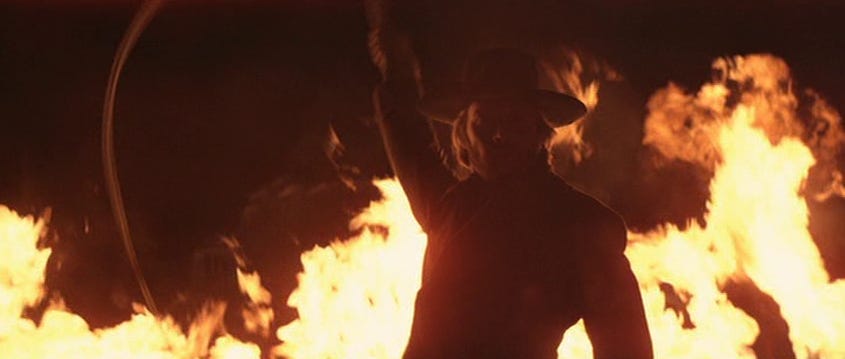
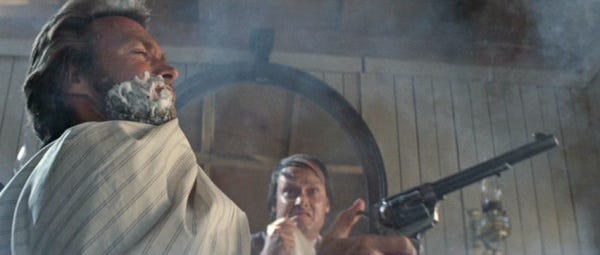
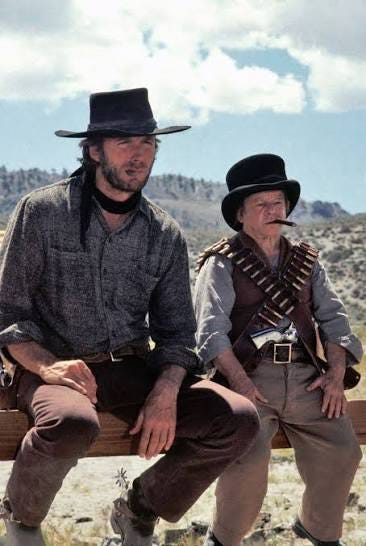
The twist of High Plains Drifter—which is awesome—ties into the assault and all of the horrible shit Eastwood does throughout the movie. It’s also telegraphed from the moment Callie returns to kill the Stranger while he’s taking a bath at the barber. As he sits in the sudsy water, she storms into the room and unloads a pistol at him from six feet away while he sinks under the water. I thought, “Okay, fuck him. Movie over,” but then he emerges unharmed to cash in his unlimited gunslinger free ticket and clean out every establishment, completely transform Lago into HELL, and literally paint the town red. The only person he shows any kind of sympathy towards is the little guy. No, I mean Mordecai, an actual little guy whom the Stranger names both sheriff and mayor and who struts around on a power trip like a bandelero with two ammo belts strapped across his chest.
The first time the Stranger lies down to sleep he has a dream of a man being whipped to death in the street and the silhouette of the face looks like Eastwood’s, but then the flashback is shown later and it’s revealed not only to be a different person entirely, but also to be the former sheriff of Lago who was whipped to death in the street by the three men whom the Stranger has been hired to save the town from. It’s further revealed that the sheriff was killed because he knew the mine on which the entire town relies is actually on government property and he planned to inform the authorities.
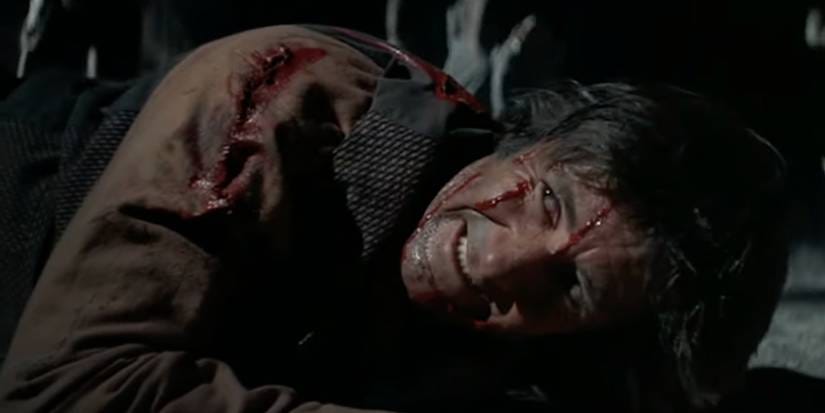
That everyone in the town was complicit in his murder and tossed him in an unmarked grave—foreshadowing!—is a grim statement of what even the most meek, pious, decent people will do for the promise of wealth and it might be Eastwood at his most nihilistic. On a rewatch, it’ll probably be more rewarding to see the Stranger rob them all blind, outsmart them every time they betray him, basically trick them into destroying themselves, and then abandon them when the outlaws return to seek vengeance. However, this viewing did not sit all that well and it’ll be a while before I circle back to HELL, I mean Lago.
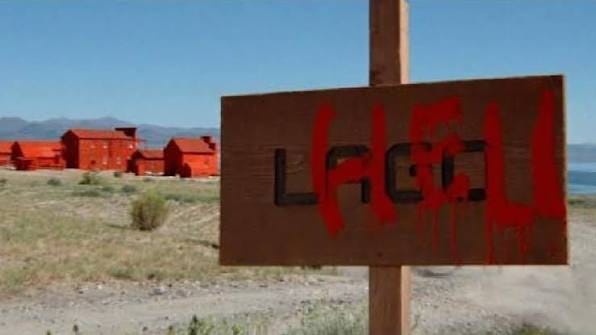
One of his greatest accomplishments.